

Today, practical it is impossible to find a garden area where currants would not grow. This garden culture has several varieties. But, black currants are most successful. It is unpretentious to the winter colds of central strip of Russia, and its berries have a pleasant sweet and sour taste and incredible benefit for the body.
The content of the article
- When is it better to plant and transplant blackcurrant - in the spring or autumn?
- How to plant and transplant blackcurrant seedlings in the spring in the ground: step -by -step instructions
- How to spray currants in the spring before the kidney bloom?
- The fight against aphids and a kidney tick on blackcurrant in the spring
- Processing of blackcurrant in spring from diseases and pests with boiling water, copper sulfate, folk remedies
- How to fertilize black currant in the spring?
- How to cut black currants in the spring?
- Why do the leaves of black currants turn yellow in the spring?
- Red spots on the leaves of currants in the spring: how to fight?
- Currant departure in the spring advice of experienced gardeners
- Video. 7 secrets of fertility of currants
When is it better to plant and transplant blackcurrant - in the spring or autumn?
All newcomers in horticultural business, before planting currants on their site, are sure to wonder when it is better to do. There is no consensus on this subject. Some experienced gardeners use autumn for this, others - spring. The choice of the time of the year, for such a transplant, is affected by the region and the variety of currants.
If the garden where black currants will grow is in the region with a temperate climate, then this culture can be planted both in spring and autumn. In the northern regions of our country, it is better to plant and transplant it in the spring. When the snow comes down, and the earth will have time to warm up.
If you did not have time to transplant the currant before the moment when its shoots went to growth, then this case needs to be left in the fall. For the middle lane of our country, the optimal time of currant transplant is the second part of October.
For transplanting black currants, you can choose summer. If your currant bush has a strong stalk, then prepare for him a shady place in your garden. If there are several cuttings, then they need to be planted in the ground at a distance of 1 meter from each other.
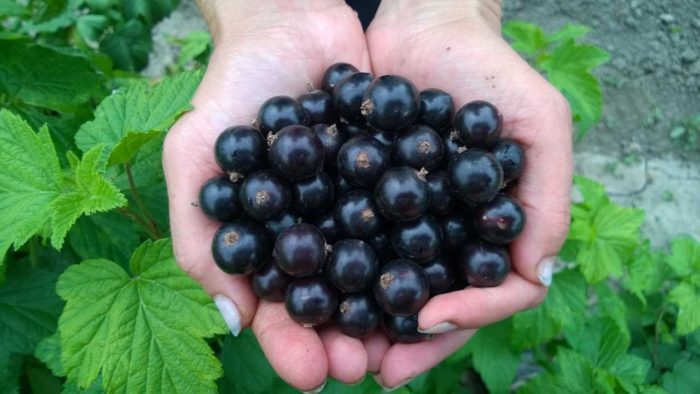
You can get a large harvest only with the proper landing of the bush
At any time of the year, you can transplant the currant bush in a specially prepared hole for this. The more land with such a transplant you leave on the roots, the faster the plant will take root in a new place.
Important: if the currant is transplanted in the fall too early, the plant can confuse the season and grow. Because of what, it will approach the winter with swollen buds. Which, of course, freeze and weaken the bush. What can affect his wintering.
How to plant and transplant blackcurrant seedlings in the spring in the ground: step -by -step instructions
- In order to plant blackcurrant seedlings in the ground, it is necessary to prepare the pits two weeks before planting. They are dug up and fall asleep with humus, potassium and phosphorus fertilizers. The soil prepared for seedlings should be loose.
- It is necessary to prepare holes from the size of the root system of the seedling. The more it is, the deeper you need a pit. The standard size of the hole for seedlings of currants 60 cm in width and 35 cm deep.
- If you need to transplant a currant bush, then it is dug up and cut into half. Under the pruning, you need to let the old branches. Young shoots can be shortened.
- Dig the currant bush carefully. So that the roots of the plant are not damaged. If the bush does not come out, then it needs to be baked again.
- In a dug bush, the roots are carefully inspected and damaged. It is also necessary to remove the larvae of pests, and treat the roots with a solution of potassium permanganate.
- Immediately before planting seedlings into the open ground, it is necessary to pour a large amount of water into the pits. The mixture prepared before should turn into a slurry into which the bush must be immersed.
- The bush is sprinkled with dry land on top. Its level should be higher than the root neck of the bush by 5-8 cm.
- We water the bush again and compact the earth covering the roots of the seedling.
How to spray currants in the spring before the kidney bloom?
Currant is a very unpretentious plant. But, she has her own weakness. Currant bushes are easily exposed to various diseases and pests. In order to minimize the risk of infection with diseases, and the damage to currant with a kidney tick, shield, aphids and other pests, plant bushes must be sprayed. This must be done before the buds of the kidneys on the currant bush.
The bushes of this plant can affect currants, aphids, shields and sawers. And this list can be continued with several more pests. The best way to deal with them is to process the currant bushes in early spring.
A good means of such a struggle is the Bordeaux liquid. She is preparing like this:
- In water (9 liters), 3%-made sulfate (100 g) and unsuccessful lime (200 g) are bred (200 g)
- Separately knead a weak solution of laundry soap (1 liter)
- The mixtures are combined, mixed and used to spray the bushes
Also, to combat pests, a solution of carbofos 0.2% or nitrafena 2% has proven itself well. In horticultural stores, you can purchase ready-made products for spraying fruit and ceremic crops: "Neoron", “Apollo" And "Mavrik". They are bred in water according to the instructions on the package.
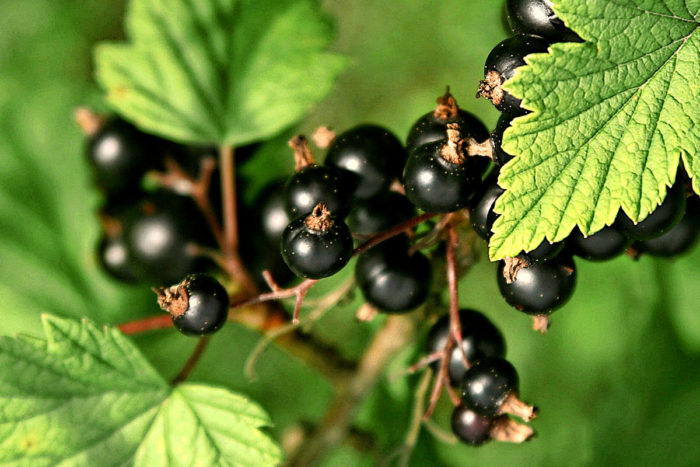
Berries on a healthy bush
In addition to protecting currants from pests, in the spring it is necessary to treat bushes from various diseases caused by fungi and viruses. Since currant diseases appear already in the final stages, it is better not to wait for this, but to treat currants in preventive measures. The most effective solution with which you can protect the currant is prepared as follows:
- In water (10 l), copper sulfate (60 g) and urea are diluted (can be replaced with urea) (600 g)
But, this universal remedy cannot protect the currant from such a disease as powdery mildew. This white fungus, which affects fruit bushes, is easily eliminated using the infusion of wood ash (1.5 kg per 10 liters of water). A solution of soda soda (50 g per 10 liters of water) or copper sulfate (1%) can also help.
The fight against aphids and a kidney tick on blackcurrant in the spring
The redness of the leaves of currants and gradual folding and dying, can be associated with the action of such a pest as gall ap. In the first case, you need to fight ants, which populate aphid on the leaves of currants.
To do this, use such drugs as "Fufanon" or "Garden Defender". Cinnamon and tobacco dust also help to get rid of ants. They need to slightly powder the bushes of currants.
If the aphid has already settled on currant leaves, then they need to be treated with the drug "Arrow" Or onion husk.
As for the struggle with such a pest as a kidney tick, it is the most dangerous pest of blackcurrant. In the best case, you are underway the crop. But, if you do not fight it, then the kidney tick can cause the death of currants.
You can find out that this pest hit the currant by increased kidneys (in winter) or unevenly developed shoots (spring). The bushes affected by this pest are behind development and have the wrong shape.
Not only is currant tick in itself is dangerous for a shrub. He can also become a carrier of such a dangerous disease as mycoplasm. And the bushes affected and oppressed by this insect cannot resist gold, glasses and other pests.
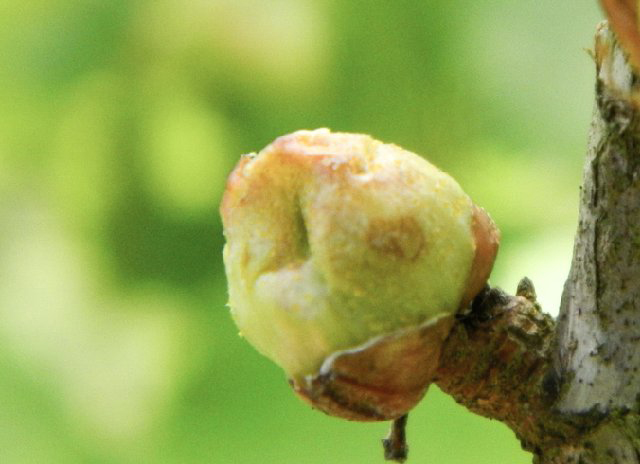
The kidneys affected by the tick
You can protect your garden from a kidney tick with a tool processing after working in the garden and buying seedlings only from trusted sellers. As for the struggle with a tick that has already begun their activities, this can be done mechanically. It is necessary to collect and burn all the affected buds of currants in the spring, and in the fall, the leaves of the shrub.
But, the most effective way to combat these insects is the treatment of currant bushes with such drugs as "Nissoraran", "Contos", "Oberon", "Bi-58", "Fospamide", "Rogor-S" and other acaricides and insectoacaricides. This must be done before flowering, when the tick is selected from the peduncle and becomes very vulnerable to chemical drugs.
You can also solve the problem of lesions of currant with a bud tick by processing the bush with garlic-horsing infusion. It is prepared as follows:
- In water (10 liters), mustard powder (1 tbsp. Spoon) is diluted and onion husk is added (150 g) and crowded garlic (300 g)
- The mixture is insisted, filtered and used for spraying
Processing of blackcurrant in spring from diseases and pests with boiling water, copper sulfate, folk remedies
Experienced gardeners, in the spring after the snow comes down, the heat treatment of currant bushes with boiling water is carried out. Such processing is extremely destructive for the larvae of many pests that have not yet recovered from the winter sleep.
In order to carry out such processing, it is necessary to pour boiling water into the bucket. Short -term contact with hot water is not terrible for currant. Dear the thermometer into the water and when it becomes about 70 degrees, you can safely process such water bushes of currants with such water.
To enhance the effect, a handful of salt or a little potassium permanganate can be added to the water. It is better to water the bushes from a watering can. At the same time, it is important to go through each branch of currants. You also need to spill the soil around the bush with boiling water.
Copper sulfate is crystallineracles of sulfuric acid salts and copper ions. This substance has high acidity, so it is used to combat the garden pests. It is bred in water 1:50 or prepared on its basis by Bordeaux liquid. To do this, they are bred in water (10 liters) copper sulfate (100 g) and slant lime (150 g). The resulting mixture is treated with a currant of 1-1.5 liters per bush.
From folk remedies for the fight against pests of black currant, they have proven a solution of urea (3 tbsps of spoons per bucket), boric acid (with the addition of liquid soap), an infusion of celandine, tobacco, garlic and potato tops.
How to fertilize black currant in the spring?
In order to achieve a good harvest, it is necessary to fertilize the currant bushes every spring. Thanks to such top dressing, this plant can bear fruit in one place for 1.5 decades.
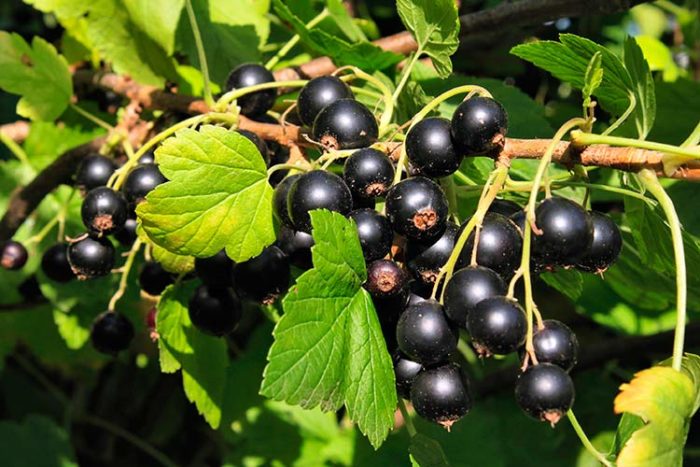
Berries in a cup
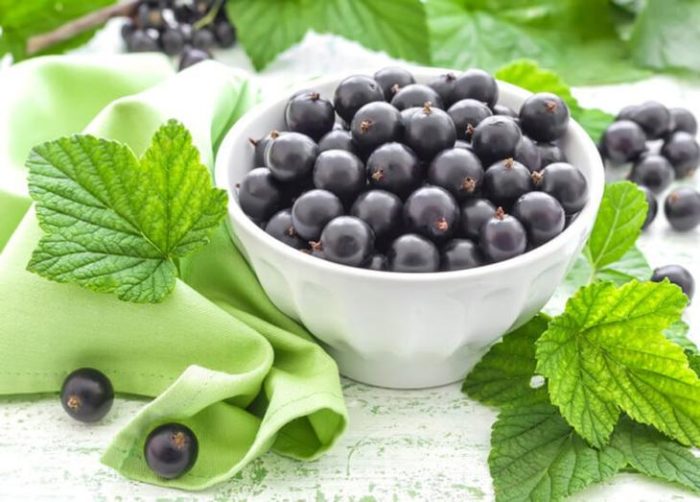
It is advisable to fertilize the bushes that have already entered the fruiting phase. That is, in the second or third year after their landing in a new place. At this time, currants are fed with organic and nitrogen fertilizers.
Nitrogen fertilizers accelerate the growth of the bush. It will go to rapid growth 1-2 weeks after the introduction of such fertilizers. The best representative of nitrogen fertilizers is urea. Under each bush in the spring it is necessary to add 50 g of urea. On top, top dressing must be filled with a layer of earth.
In the fourth and subsequent years of the life of a bush of currants, the amount of such fertilizer can be reduced to 25 g. Moreover, to make urea such currant bushes is necessary in two stages:
- Early spring 12 g - 13 g
- Immediately after flowering 12 g -13 g
In order for top dressing to act faster, before entering them, it is necessary to loosen the soil around the bush and pour the plant. And after that, make fertilizers.
They must be made at a distance of 20-30 cm from the stems of currants. After making fertilizers, they need to be covered with a layer of mulch. If cow manure is chosen as a fertilizer, then it must be added to the soil to a depth of 25 cm and within a radius of 1 meter from the bush of currants.
How to cut black currants in the spring?
Proper trimming of currant bushes allows you to form a strong fruiting bush. With the help of such an action, not only remove non -viable shoots that weaken the plant, but also increase the area of \u200b\u200bthe bush.
If the pruning is carried out in early spring, then the vegetation and fruiting of the bush can be accelerated. Pruning gives a signal to form a bush of new shoots. The cut bush receives as many nutrients as the uncircumcised. But, at the same time, he spends them only on the shoots he needed in the future.
How to trim the currant? There is nothing complicated. Look at the following scheme:

Cutting scheme scheme
- The first pruning must be carried out a year after planting seedlings of currants. Such pruning will accelerate the emergence of new shoots for balancing the root system and the ground part of the bush.
2. In the second year of life, the currant bush must be left 3-4 of the largest shoots. All the others need to be removed. At the same time, you need to cut the bush so that normal shade is formed inside it.
An ideal solution will be such in which each escape will receive the same amount of sunlight.
3. In the third year, sanitary pruning is carried out, removing weak and brittle shoots. It is also necessary to trim new, only shoots that have appeared. Do not forget that the sun is available to all the main shoots. Her lack may affect the taste of currants. With such a deficiency, sourness will prevail in it.
4. About five years after planting currants, the bush should be completely formed. He should have about twenty skeletal branches. Extra -forming shoots must be cut every spring. In this pruning, it is necessary to remove the aged branches formed a year after planting the plant.
5. During the trimming of the fifth and subsequent years, you need to update the old shoots with new ones. The old shoots, painted in dark color, need to be removed from the bushes. They have already developed their resource and will no longer be able to bear as many fruits as they expect from them. The old obsessed branches after trimming must be treated with a var.
Why do the leaves of black currants turn yellow in the spring?
Yellowed currant leaves in the spring can signal the disease of the plant and requires immediate intervention. Most often, such a problem appears due to insufficient or excessive moisturizing the plant.
Watering currants must be correlated with the amount of precipitation. With strong and frequent rains, it is necessary to minimize currant watering. If the rains are rarely poured, then be sure to water the currant at least twice a week.
Important: with frequent rains, useful substances from the soil can be washed out. In order for the impoverished soil under the currant does not cause a lack of nutrient compounds, currants must be periodically fed with a weak solution of mullein.
Another cause of yellowing leaves in currants is the incorrect location of the bushes on the site. Since currants need space, the bushes need to be planted where there are no large plants. They will not only shade currants, but also cause the lack of this plant of nutrients by bushes.
The cause of yellow leaves on currants in the spring can be pests. Most often, such a problem is associated with the actions of the caterpillar of the currant glass. They feed on the juice of this plant, sucking it from young shoots.
You can reduce the risk of such a caterpillar on your currant bushes by regular loosening of the soil around the bush. Currant glass is resistant to chemicals. If you find damaged branches and leaves from the action of this pest, then they need to be collected and burned.
You can deal with other pests using insectoacaricides or other means that we talked about above. Processing of currant bushes should be carried out before the flowering of this plant.
Red spots on the leaves of currants in the spring: how to fight?
Red spots on currant leaves can be caused by such a fungal disease as anthracnosis. There are several reasons for such a fungal lesion of currants. The main of which is increased humidity. This disease is very dangerous for currants. You can minimize the risk of anthracnosis disease by burning fallen leaves in the fall.
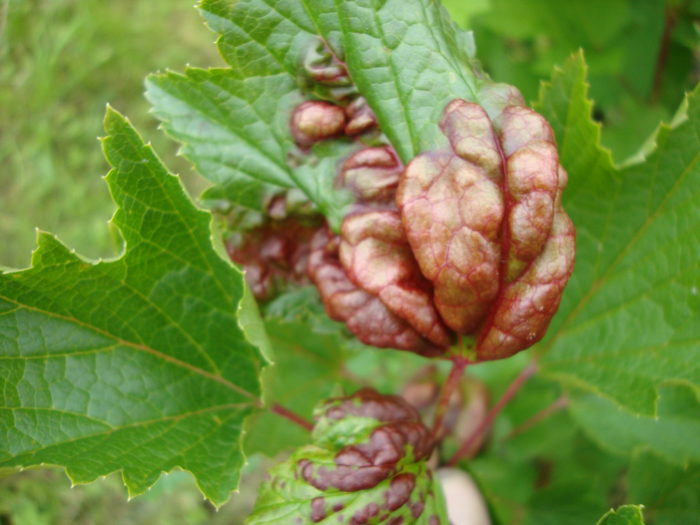
Redness of currant leaves
If you notice the redness of the leaves of currant in the summer, then it must be sprayed immediately "Fitosporin". Also, this drug needs to be treated with currant leaves in the fall, before they fall.
If the risk of this disease is great, then in the spring process the bushes of currants with 3%nitepropene.
Currant departure in the spring advice of experienced gardeners
- When cutting currants, do not spare the old branches. Branches of bushes, which for more than 4 years need to try to remove. Moreover, maximum fruiting falls on branches that are three years old. Then, every year they give the crop less and less.
- When the kidneys of currants begin to swell, be sure to dig and put up the bushes of this garden culture. Any universal fertilizer containing a large amount of phosphorus is suitable as top dressing. You can also use humus.
- During the ties of the berries, it is necessary to carry out a second top dressing. It is also necessary to monitor the level of humidity. If the rains are rare, then it is necessary to periodically water the currant with artificial irrigation.
- If the signs of a particular disease of currants were found during the formation of berries, then it is impossible to use chemical drugs. They can replace black pepper, coniferous decoction, tobacco powder, urea solution and other natural analogues.
- In the fall, currants must be prepared for wintering. To do this, you need to collect fallen leaves, dig the ground under the shrub, sprinkle with humus and cover the bushes with mowed grass.