
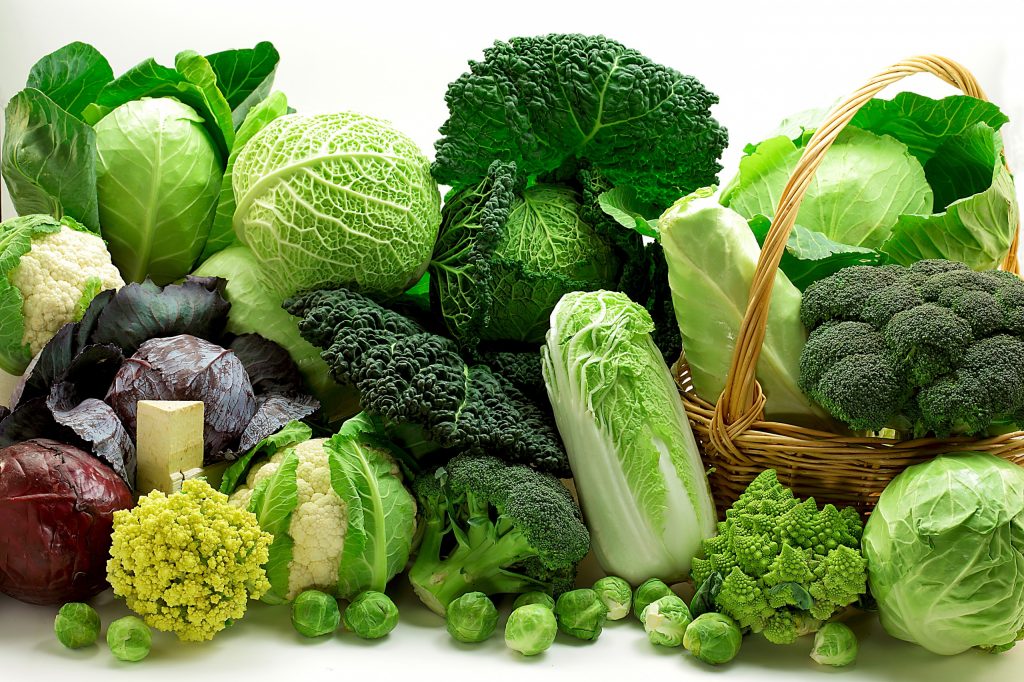
Fertilizers for cabbage from seedlings to the formation of heads. Care tips and recipes for nutrient mixtures.
The content of the article
- The first top dressing of cabbage
- Commercing seedlings of cabbage urea
- How to feed the cabbage immediately after planting in the ground?
- White cabbage fertilizer
- Fosphorus fertilizers for cabbage
- How to feed the cabbage for growth of folk remedies?
- Feeding colored and ordinary cabbage in open ground with yeast
- Combining cabbage seedlings after diving
- How to feed the cabbage for the formation of a head?
- How to feed the late cabbage in August?
- Video: How to feed the seedlings of cabbage correctly?
Cabbage has long been a worthy place on our table. It is useful in fresh, boiled, and sauer states.
Therefore, gardeners regularly grow different varieties of cabbage in their areas.
What are the subtleties of caring for her, feeding at all stages of ripening - we will consider in more detail.
The first top dressing of cabbage
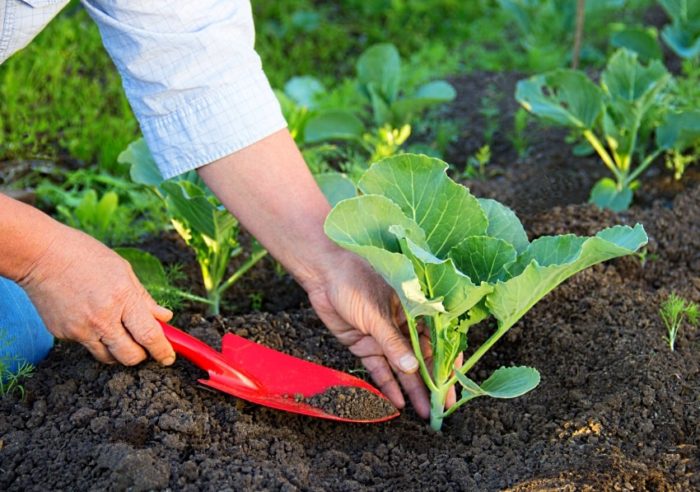
a woman feeds young cabbage in open ground
Depending on the quality of the soil, perform the first top dressing for seedlings of cabbage either:
- by introducing fertilizers to the hole before planting
- 1.5 weeks after diving
In the first case, mix the earth with:
- cow humus 0.5 kg
- superphosphate 1 h l
- wood ash - 2 tbsp
Put the mixture on the bottom of each hole.
In the second case, prepare the solution from:
- water 1 l
- ammonium nitrate 2.5 g
- potassium chloride 1 g
- superphosphate 4 g
Pour a 0.5 liter of a nutrient mixture of the root of the root each.
Or 3 weeks after planting seedlings in the ground, in which fertilizers were not introduced, drink cabbage with a aqueous solution of mullein.
- In a bucket of water, you need 1 kg of fresh manure.
- It is more optimal to prepare a solution for feeding in a barrel. To do this, pour 1 bucket of mullein with water and let stand for a day.
Give the rest of the nutrient fluid to other cultures in the garden or fruit trees. - Lie under each bush of cabbage for 0.5 liters.
Commercing seedlings of cabbage urea
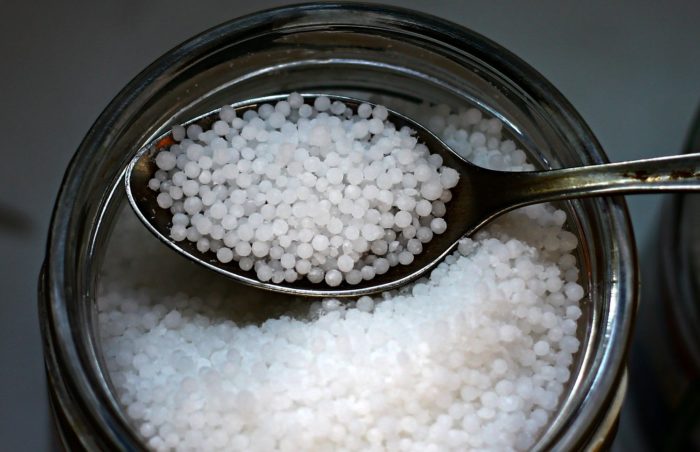
urea in granules for feeding cabbage
Cabbage seedlings 2 weeks after planting, feed a mixed solution from:
- urea and potassium fertilizers - 10 g
- superphosphate - 20 g
- water - 10 l
How to feed the cabbage immediately after planting in the ground?
If you organized organic fertilizers in the holes before planting cabbage seedlings, then then it does not need to be fed by anything. It is enough to pour clean water.
And after 15-16 days, prepare an aqueous solution of organic substances for cabbage, for example, chicken, compost, mullein, stems of weeds and pour.
White cabbage fertilizer
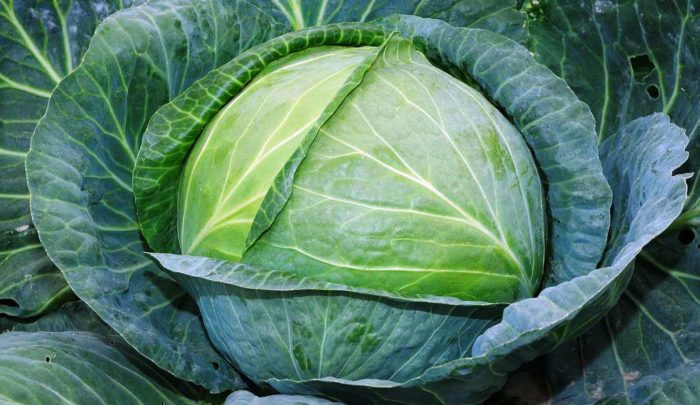
the large head of white cabbage is grown as a result of top dressing
White cabbage respects organic matter, potassium and phosphorus liquid compounds.
Therefore, for her, choose what is optimal depending on the phase of its growth and the type of soil.
For example, for early varieties of white cabbage, 2-3 top dressing procedures are enough. And late they need up to 5 before cutting heads.
White cabbage is suitable as fertilizers:
- mullein and his humus
- bird litter
- compost
- infusion of grass stems for the first top dressing
- superphosphate and double superphosphate
- nitrofosk
- potassium chloride
- urea
- wood ash
- sulfuric potassium
- dolomite flour
- boric acid
- ammonium nitrate
Fosphorus fertilizers for cabbage
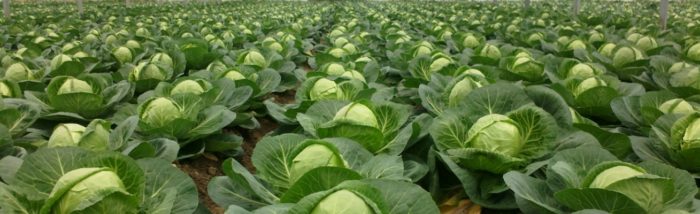
the field of ripening white cabbage, which was regularly fed by organic and mineral fertilizers
Phosphoric fertilizers are responsible for the sugar content in cabbage and its taste.
On average, for a yield of 10 kg she needs 15 g of phosphorus, most of which she “absorbs” in July and August.
Nevertheless, be careful using mineral fertilizers. Their overabundance will negatively affect the crop, its appearance, taste and benefits of cabbage. And the disadvantage will appear on the vegetable during the ripening of the head of the head.
For example, the lack of phosphorus is expressed in a change in the color of the leaves - they darken to a rich emerald shade, their ends are wrapped and acquire a bright purple color.
You should know that the phosphorus -containing substances during the second and subsequent top dressing is more rationally applied not under the root, but between the rows of cabbage.
- To do this, make a recess of up to 15 cm and pour superphosphate in the amount according to the instructions.
- Then, well, water the beds with cabbage with water and plug the soil after a couple of hours.
Depending on the type of soil for cabbage, use superphosphate and double superphosphate. Remember that in the usual version of fertilizer, the percentage of phosphorus is up to 22%, and in double - 2 times more.
How to feed the cabbage for growth of folk remedies?
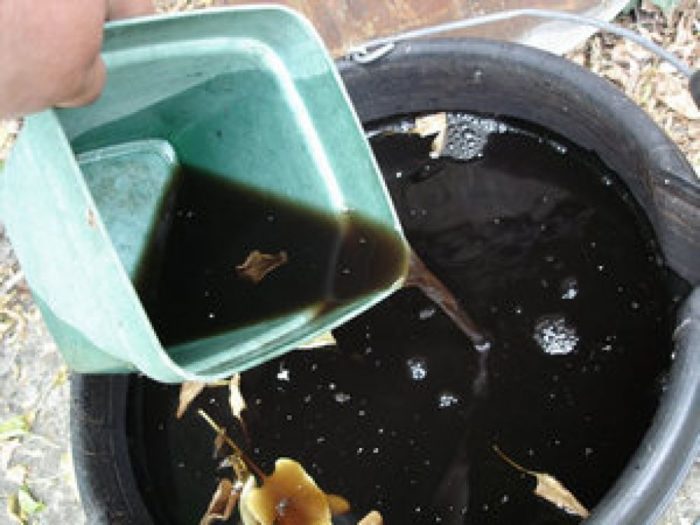
the gardener prepares green tea from nettles - top dressing for cabbage
Not all gardeners use chemical fertilizers to increase crop yields. They found alternative methods - folk remedies, or in other words what they use in everyday life.
So to activate the growth of cabbage, use:
- aqueous solution of boric acid.
Combine its teaspoon with a glass of boiling water, stir and pour water into a bucket. Conduct spraying the leaves in early July for their quality development and growth, - dissolve brewery in an amount of 1 pack in a bucket of warm water.
Water 2 times in the summer with an interval of a month on a warm sunny day closer to the evening.
After a couple of days, feed the cabbage with wood ash, since the yeast is pulled out of the land of calcium.
Yeast is allowed to water and seedlings, only their solution should be a lower concentration, - food soda diluted in a bucket of water.
You need 20 g of its powder per 1 container.
Pour cabbage from a watering can with this solution.
It helps to maintain the integrity of the heads of heads, lack of cracks during ripening and further storage, - green tea from the stems of young nettles. By the number of nutrients, it is at the same level with manure. Gather fresh raw materials and put in a container, filling it half.
Pour warm water and close tightly with a lid. Put in a dark place for 3-4 days, then strain. Dissolve the liter of the finished infusion in a bucket of water and pour cabbage.
It is believed that the infusion of nettle in the level of beneficial substances is quite capable of replacing all other feeding of the vegetable, - ammonia alcohol, diluting it 3 tbl in a bucket of water. Pour the cabbage under the root at the first top dressing,
- a banana peel that is rich in potassium.
Collect it and dry it, grind and pour warm water at the rate of 1 peel per liter.
Let it brew 3-4 days. Strain and pour cabbage beds.
There are gardeners who simply put the fresh peel of the banana on the bottom of the hole during planting seedlings, - fresh fish.
Lower one small fish, for example, sprat, into the hole before planting seedlings.
Although the fish is rich in phosphorus, be prepared for a specific aroma in your garden, - yeast and spoiled jam.
Fill a 10-liter container with water, sour jam and pressed yeast in an amount of 9 liters, 500 g and 300 g, respectively.
If you use dry yeast in bags, take 3 pieces.
Put the knead in a dark place for a week and a half. Then pour the glass of the mixture into a bucket of water and either water the cabbage, or spray it.
Repeat the procedure once a week, provided there is no rain.
Yeast with jam contribute to the healthy development of leaves and fortress of heads of cabbage, - the egg shell, grinding it into powder.
Collect it, for example, in winter, dry and grind it on a coffee grinder.
Store in paper bags up to planting cabbage in the ground. Before that, fall asleep a handful of powder into the hole. The egg shell enriches the soil with calcium and eliminates the need to introduce lime for too acidic types of soil, - potatoes whole or his skins.
Grind the material to the state of porridge, and lower the handful into the hole before planting cabbage.
Be prepared for attacks by pests - wireworms and slugs, because they "love" substances that form during the decomposition of potatoes, - a solution of iodine, vinegar, toothpaste, potassium permanganate, salt. Use a weak concentrate of any of the listed substances for spraying or watering cabbage.
Feeding colored and ordinary cabbage in open ground with yeast
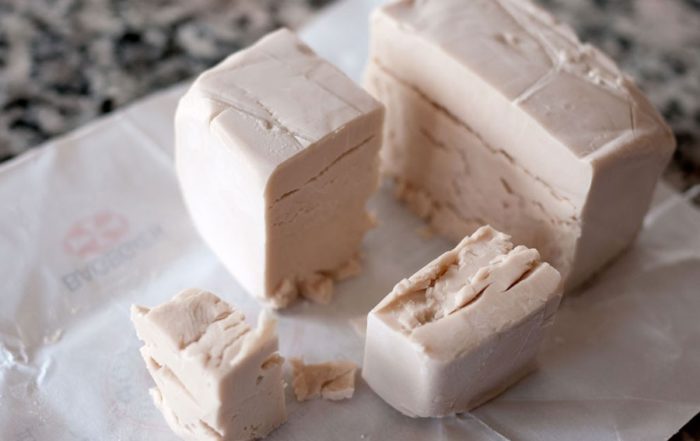
cutted living yeast in front of the starter to feed cabbage
Both color and ordinary cabbage experience an increased need for nutrition during the growth and formation of heads of heads/inflorescences.
One of the excellent means that provide the soil with useful minerals and trace elements and “quenching” cabbage hunger is yeast.
For watering them, use a number of tips:
- use only fresh "living" or dry yeast
- for top dressing, choose a warm time when the earth warms up well. Therefore, 2 times during the summer is enough to feed the cabbage,
- after 2 days, be sure to add potassium fertilizer, for example, wood ash between the holes. The yeast absorbs this trace element and cause “hunger” in vegetables.
Use: to fuel cabbage:
- dry yeast
- living
- live beer
In the first case:
- mix 10 g of yeast, 2 tbsp sugar and 10 l of warm water
- leave it for 2 hours to infuse
- dilute with clean water the resulting solution in a proportion of 1: 5
- water the root of cabbage
- give the rest to fruit trees, flowering flower beds or berry bushes
In the second case:
- 0.5 kg of fresh yeast dissolve in 5 liters of warm water
- dilute the solution again with water in a ratio of 1:10
The third option is the most expensive and not every gardener will easily part with aromatic beer, giving it to the cabbage for growth.
Combining cabbage seedlings after diving
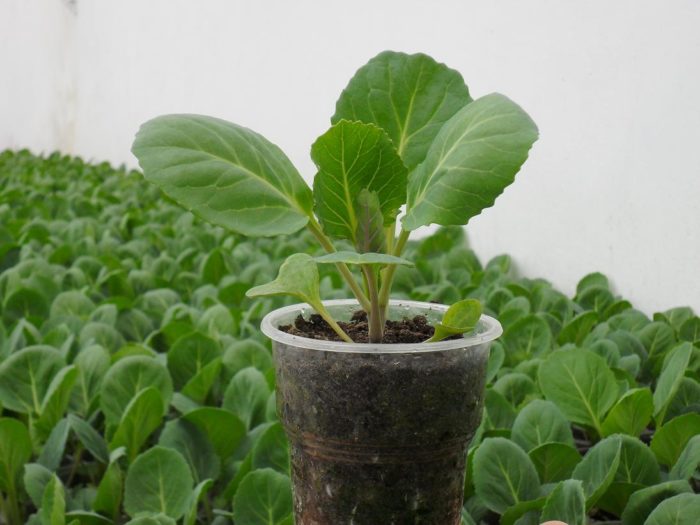
cabbage seedling after diving in a plastic glass
Cabbage, like many other vegetable crops, is grown through seedlings. It is sown in early spring either in greenhouses or in boxes with the ground. In the second case, dive on grown plants in plastic glasses is carried out.
For good development and growth of leaves, cabbage seedlings are fed:
- for the first time a aqueous solution of bird droppings. Dilute the fertilizer in a ratio of 1:20 and pour under the root to every young plant.
After a couple of days, take out the open air so that the cabbage is tempered. She should withstand the temperature up to +3 ℃, - for the second time, a mixture of wood ash and superphosphate taken in a ratio of 2: 1.
Pour the resulting mass with a liter of water.
After such top dressing, each young plant should have 3-4 healthy sheets, which means it is time to transplant seedlings into open ground.
How to feed the cabbage for the formation of a head?
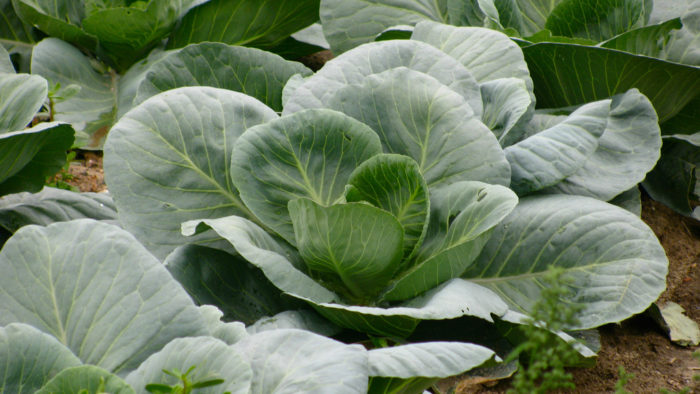
cabbage at the stage of forming a head of head needs additional top dressing
For all varieties of cabbage, except for the early ones, prepare a third top dressing from a aqueous solution of mullein and superphosphate.
Preparation of fertilizers:
- mix fresh cow paved manure with water in a proportion of 1: 5
- dilute the resulting liquid with clean water at the rate of the glass per bucket
- add 30 g of the second ingredient
Water under the root in the amount of 1-1.5 liters.
How to feed the late cabbage in August?
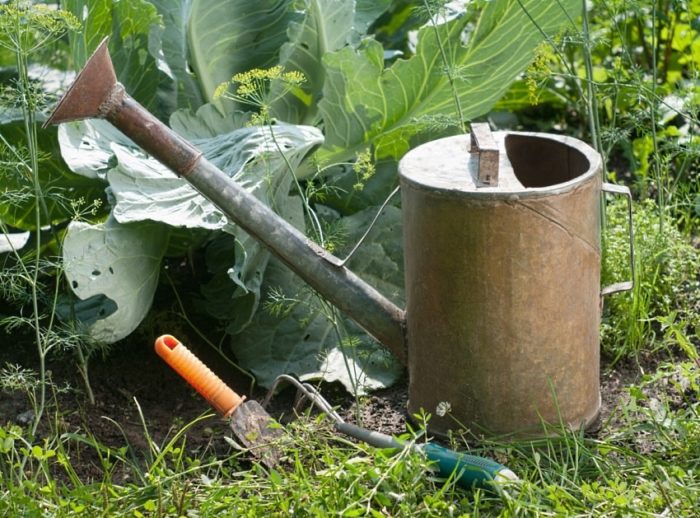
garden inventory for watering cabbage with liquid fertilizers
To extend the shelf life and the quality of cabbage of late varieties of cabbage, feed them in the last summer month:
- potassium at the rate of 10 g per 1 sq.m., if the type of soil in your region is not black soil,
- nitrogen at the rate of 10 g per similar area. It will contribute to the healthy development of the cabbage head,
- infusion of mullein or chicken droppings,
- boric acid at the rate of 0.1 g per 1 sq.m. if you live in the southern regions.
So, we examined the stages of fertilizers of seedlings and adult cabbage at different stages of its growth, learned to properly prepare nutrient mixtures.
Let your cabbage grow large and healthy, and the crop pleases you with its taste and storage duration!