

Planting and leaving the seedlings of cucumbers.
The content of the article
- Why is the seedlings of cucumbers turn yellow: what to do?
- What to do if white spots appeared on the seedlings of cucumbers?
- The seedlings of cucumbers stretched out: what to do?
- What to do if the seedlings of cucumbers dry the edges of the leaves?
- Why did cucumber seedlings turn white?
- Why does cucumber seedlings fall, wither and dies?
- Why does the foot seedlings dry out?
- Someone eats seedlings of cucumbers: how to process?
- The seedlings of cucumbers froze: What to do?
- Video: growing cucumbers at home
In this article, you can learn about which pests and diseases amaze the seedlings of cucumbers. We also find out the methods of treating seedlings from a variety of painful symptoms.
Why is the seedlings of cucumbers turn yellow: what to do?
Cucumbers grown independently in the garden are very tasty and quite healthy. They, of course, differ from store vegetables.
However, it is not easy to grow healthy cucumbers, since various diseases often attack plants and all kinds of problems appear. The most common problem associated with seedlings of cucumbers is yellowing of leaves.
There are a lot of reasons why the leaves turn yellow. The most important of them are:
- Insufficient amount of nutrients, such as nitrogen.
- An excess of nitrogen in the soil.
- Insufficient amount of moisture in soil or abundant watering.
- Sudden temperature changes.
- Seedlings of cucumbers may turn yellow after toxins poisoning. Many gardeners install seedlings on foam plates. Seedlings, after it comes into contact with polystyrene, receives harmful substances from it.
- Seedlings turn yellow if it becomes crowded in cups. Roots need expanse and good nutrition.
- Insufficient light.
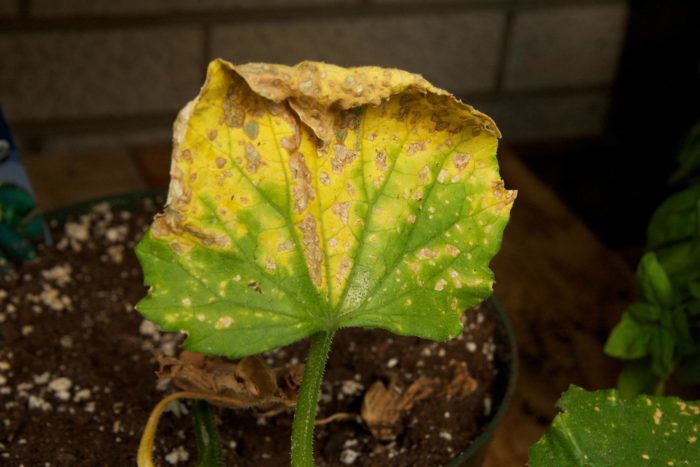
The leaves on cucumbers turn yellow
If you want to avoid such troubles, follow the following recommendations:
- Balance the amount of fertilizer in the ground. Make sure that in the ground does not exceed the level of ammonia. If there is little nitrogen, add fertilizer to the soil, for example, azogran.
- If you plan to use a foam substrate, then lay the film on top of it.
- If you planted the seedlings of cucumbers on the balcony, then do the backlight for her.
- Follow the microclimate. Cucumbers adore moisture, respectively, do not spare water. But remember that you can water seedlings only with warm water.
- Follow the level of calcium in the soil. The most ideal fertilizer that contains this component is a comprehensive fertilizer, for example, Kemira Hydra.
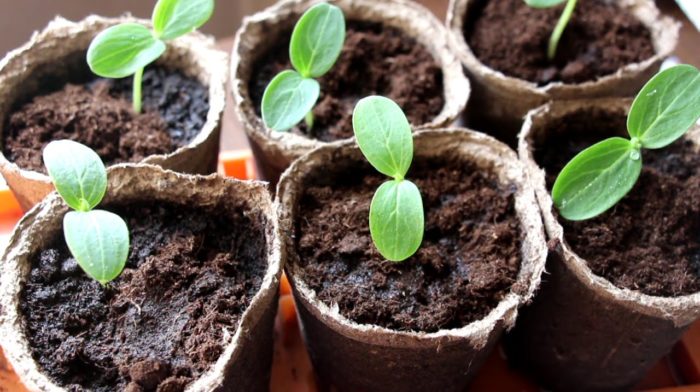
Cutting cucumbers
What to do if white spots appeared on the seedlings of cucumbers?
Very often before planting and during active growth, seedlings of cucumbers begins to hurt. The most famous disease is powder.
If this disease is present on seedlings, a muddy plaque in the form of white spots occurs on the sheets and stems. Over time, these spots increase and affect all the leaves that turn yellow after that, twist and dry.

Puffy dew on the leaves
If you notice small single spots of white color that have a round shape, do not wait until they increase and cover the entire plant. Take measures immediately.
Seve the seedlings of fungicides immediately, for example, “tops” or a “topaz” tool. To prepare this tool, take 2 ml of the product and dilute it in a bucket of warm water. Carry out each treatment in dry weather so that there is no wind as a prevention or at the first appearance of the disease.
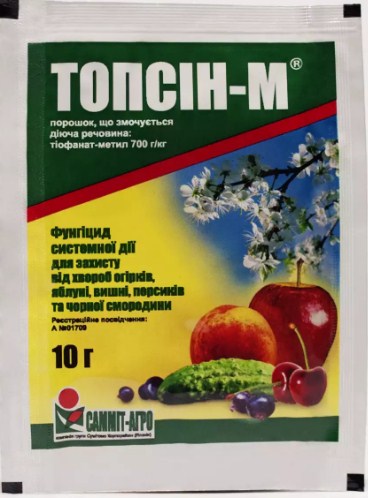
Cuts care
Many gardeners try to avoid chemicals to destroy powdery mildew. They mainly use natural drugs that can be prepared independently:
- Take 1 kg of mullein, dilute it into 3 liters of water. Put the insisting for 3 days. After that, strain the composition and dilute it into 3 l of pure water. With this solution, treat plants that are infected with the disease.
- It destroys the powdery dew sour milk. Take 1 liter of sour milk, mix it with 1 liter of water heated with a little water. Stir well and strain. Spray seedlings with a composition once a week.

Care for seedlings
- Take 50 g of ordinary baking soda, a bucket of water and a small piece of laundry soap (about 50 g). Combine these components and mix the composition thoroughly. Process them with cucumber seedlings once a week.
The seedlings of cucumbers stretched out: what to do?
Many vegetable crops have a number of features. And in order to get a good harvest, you need to observe them. There are situations when cucumber seedlings are stretched. What to do in such situations?
If you find such a problem, first of all change the light mode and temperature in the place where they grow. Reduce the temperature so that it is approximately 15 ° C. Add additional lighting.
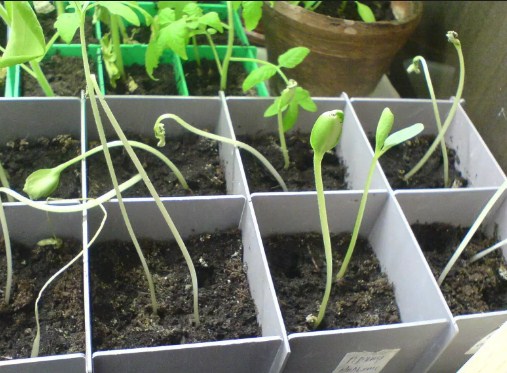
Seedlings may stretch due to high temperature in the room
Did your seedlings stretch out a lot? In this case, add round -the -clock ultraviolet lighting. In the afternoon, you can put seedlings on the balcony, but before bedtime, be sure to bring it into a warm room.
In rare cases, the seedlings of cucumbers become long due to sowing density. To eliminate such a problem, plant plants or increase the soil area for each unit. If you decide to plant seedlings in separate cups, you can avoid a similar problem.
If your seedlings stretched out before transplanting into the soil, help her like this: carefully deepen each bush to the mark where the cotyledon leaf is located, then pour with loose soil. If you have to transplant seedlings into cool ground, then do mulching around each seedling.
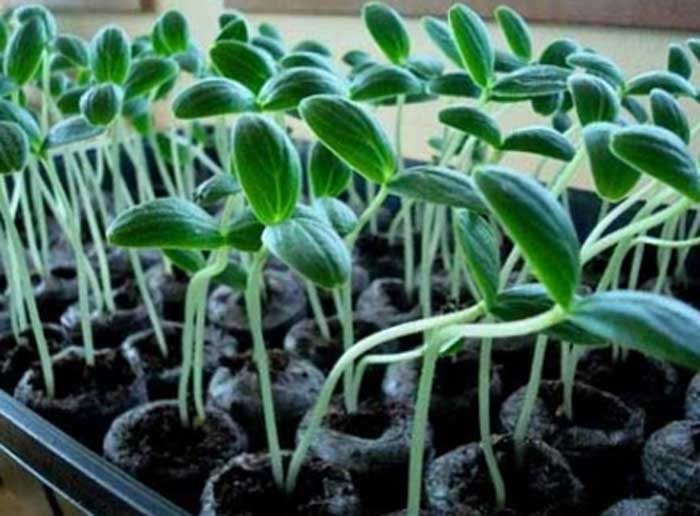
Perhaps the seedlings are planted too tightly
To do this, you can apply a black perforated film. It is she who will allow the earth to warm up faster and will not give moisture to evaporate. Also, this method allows you to solve the problem of all gardeners - to get rid of part of the weed grass.
For elongated seedlings, you can use organic fertilizers or immune products. But before that, bring it to the ground potassium.
We offer you this excellent option for elongated seedlings - watering plants with the following composition: take 1 tbsp and dilute it in 1 glass of water. It is not recommended to fertilize seedlings with fertilizers that provoke rapid growth.
What to do if the seedlings of cucumbers dry the edges of the leaves?
The drying of the sheets of cucumber seedlings can occur due to several causes. If you are faced with one of them, try to immediately eliminate. If you if you won’t do it in time, the plants will fade and die.
The reasons for the drying of the leaves such:
- Leaves of cucumber seedlings may dry due to poor-quality planting material. In such a situation, you cannot help with anything plants. It is better, of course, if time permits, plant the second batch of seedlings, but already using quality material.
- You can prepare such a substrate in advance: take 1 liter of peat and 1 liter of humus. Add 1/2 lords and 2 whispers of ash to these components. Mix everything well and can be used. Additionally, sprinkle a little ordinary soil from the garden to the resulting material.
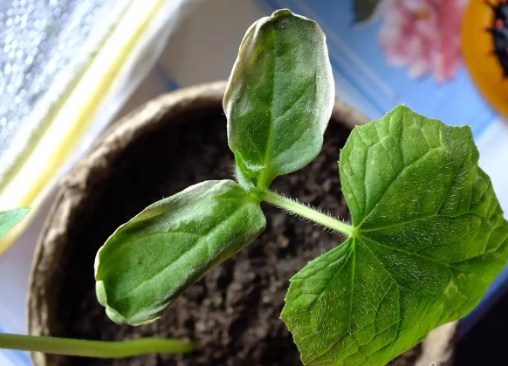
There are several causes of dry leaves
- The leaves can dry out due to insufficient amount of power. As a rule, this is due to the fact that seedlings are not enough space in the planting dish. In this case, do not water the plants for 2 days, but do not bring to them at all.
- After that, gently remove each bush with the ground and transfer to a large container. If you do not want to damage seedlings, then reanimate it with special fertilizers, for example, potassium gray or superphosphate.
- The leaves can dry up even due to improper watering. Many people know that cucumbers adore strong moisture. But this is only for those plants that are planted in the garden in open soil.
- Indoor soil does not require strong watering, since the room does not have the right ventilation and sufficient natural heating. In this case, reduce the frequency of watering and make sure that the earth is not very wet.
Why did cucumber seedlings turn white?
As mentioned a little higher, white spots appear on the seedlings of cucumbers due to powdery mildew. Also, leaflets can purchase white plaque for other reasons.
For example, if you found white mucus on the leaves, and their edges dried up a little, then you attacked the seedlings white rot. Leaves can still turn white from the lack of nutrient components. In such situations, they do an excellent job of feeding.

Signs of powdery mildew or white rot
If you want your seedlings not to be struck by such diseases, then disinfect the soil and feed seedlings with mineral fertilizers. If you plant cucumber seedlings in a greenhouse, then add timely watering and ventilation of the greenhouse to these measures.
Why does cucumber seedlings fall, wither and dies?
One of the main reasons for the wilting of the leaves of seedlings is insufficient light. Do not worry about this. Just put seedlings in the sun or plant in open ground.
Also delete those plants that form a shadow. If you notice that the lower leaves dry out, then carefully cut them. If the seedlings dry out due to a lack of moisture, just water it more often.
Do not overdo it with watering, since excess moisture can also cause plant wilting. In this case, water seedlings every day, but in small doses.
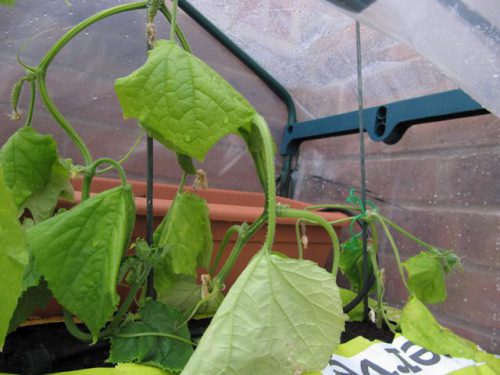
The leaves of seedlings wither
The leaves can also fall off and fade from the poor -quality land. This happens if there are not enough useful trace elements in the ground or there are a lot of them.
- Excessive soil fertilizer. The roots of seedlings are burned, wither, and after that the leaves fall.
- Little fertilizer. The seedlings of cucumbers begins to fade and dry. As a result, she dies over time.
In any of these cases, a transplant will come to the rescue.
Why does the foot seedlings dry out?
If you find that the seedlings of cucumbers unexpectedly fell, and the stems have become very thin, then know that the culprit of these processes is an ordinary fungal disease that is commonly called root rot.
Root rot appears, as a rule, under poor conditions of growing seedlings. The causes of the disease are the following:
- Watering with cool water.
- Frequent feeding of seedlings with fertilizers.
- Strong watering.
- Unexpected temperature changes.
If the plant fell ill at the beginning of growth, it begins to turn yellow, then rot and dies. If the disease was struck by the plant before you get to plant it in the ground, its stems will not rot, but will dry.
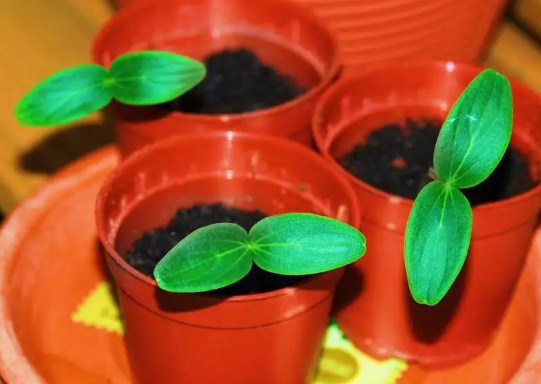
The reason for the drying of the legs is root rot
Such seedlings, as a rule, do not die, but stops in growth, and its roots are developing poorly. After that, the seedlings will take root worse, lag in growth and give a minimum crop.
Do you want your seedlings not to affect a similar problem, then adhere to such rules:
- Before you get together to sow seeds, be sure to disinfect the earth.
- Do not Seyte too thick seeds of cucumbers.
- Do not allow the room in which the seedlings will be highly high humidity and temperature.
- As often as possible, loosen the earth in containers with seedlings.
- Often ventilate the room where there will be seedlings.
- After each watering, sprinkle the soil with dry sand.
- Remove the seedlings that fell ill with the ground, while capturing neighboring bushes.
- Process the places where the sore seedlings grew with the following tool: 1.5 g of potassium permanganate dilute in a bucket of water, with a capacity of 10 liters.
Someone eats seedlings of cucumbers: how to process?
The main pests Young seedlings of cucumbers are bear, aphids, cucumber mosquitoes, whiteflies and many others.
- If you find that the leaves are twisted and turn yellow on your seedlings, the plants began to grow slowly and dark translucent bugs appeared on them - this means that aphids attacked them. Process seedlings with this tool: take 500 g of garlic, chop it, dilute it into 3 liters of water. Insist 5 days and you can apply.
- The bear is able to damage the root of the seedlings of cucumbers. She eats her root system. After that, the main escape begins to bend and dry out. You can defeat the bear using this tool: take black ground pepper (5 tbsp.) Or vinegar (500 ml). Dilute one of these components in 10 liters of water. Pour the resulting tool into the minks from which the bearings appear.
Many pests can attack cucumbers
- Slugs (in appearance are very similar to snails, but only without shells) eat leaves, ovaries, small fruits of cucumbers. You can fight such pests in this way: remove them from seedlings mechanically or using a bait.
- Prepare the bait like this: Take a piles of potatoes. Cut into two halves. Cut out a small recess in each part. Put such a half near each bed. In the morning, the slugs will hide into this potatoes, and you will only have to collect them and remove them from the beds.
The seedlings of cucumbers froze: What to do?
Cucumber seedlings do not tolerate frosts quite poorly. If you have such a nuisance, sow the seeds of cucumbers for seedlings again. Since there are very few chances that the frozen seedlings will survive and bring good fruits.
If the damage is minimal on your seedlings, then you can definitely save the plant. Go as follows:
- Report seedlings in a warmer room.
- Reduce the amount of watering for a while.
- Process seedlings with a special tool.
You can pour under the root system "Zircon". Dilute it according to the instructions and water the plant only if well -moistened soil, so as not to damage the horse system.

Cucumbers tool
Many agronomists for frozen seedlings recommend using more as a fertilizer "Epin". This tool helps restore wilted seedlings.
You can also use this tool in the fight against pests if the seedlings have acquired yellowish. If you begin to process seedlings with this fertilizer, leaves and ovaries will not fall on it, and you will collect the future crop much earlier than the due date.