

We will tell you how to choose the right paint for the walls, as well as offer interesting ideas for painting walls.
The content of the article
Comfort and comfort in the apartment are very important for any housewife. The more you spend strength in order to create beauty in housing, the more expensive your work will be. But, if it is very easy to put a vase with a bouquet on the table, then painting the walls of the apartment is wrong - this is in vain spent money and time. All the same, you will have to redo the work. Before you start painting, delve into the work itself and consider some points. Only after that the work will please you, and the apartment will become more comfortable.
How to paint the walls: selection of paint
We all know that the word "paint" itself is associated with beauty. So it is, because paint is able to bring new breath into the house, give the room a unique look and novelty. For painting the apartment, special compositions are used. Of course, the paint should be completely safe for human health. It is advisable to give preference to quick-drying compositions that do not have unpleasant odors, light during application that do not require experience and some special skills.
The wall paint should have increased quality indicators. This is necessary because the walls are more affordable.
Important: also pay special attention to the coating indicator. This indicator is responsible for how many paint you apply to the wall so that the layer turns out to be perfectly even and painted over the original color. It is this characteristic that determines the number of paint for work, the efficiency of the material.
To calculate the amount of paint, measure the room and calculate its area. At the same time, do not subtract the area of \u200b\u200bdoorways and windows, since the supply of excess material will not hurt you. But, if you get the paint "under zero", then you may not have enough it.
An important nuance during collection of paint - moisture indicators. If the room is wet enough, then buy a paint that has increased resistance to moisture and protection against mold.
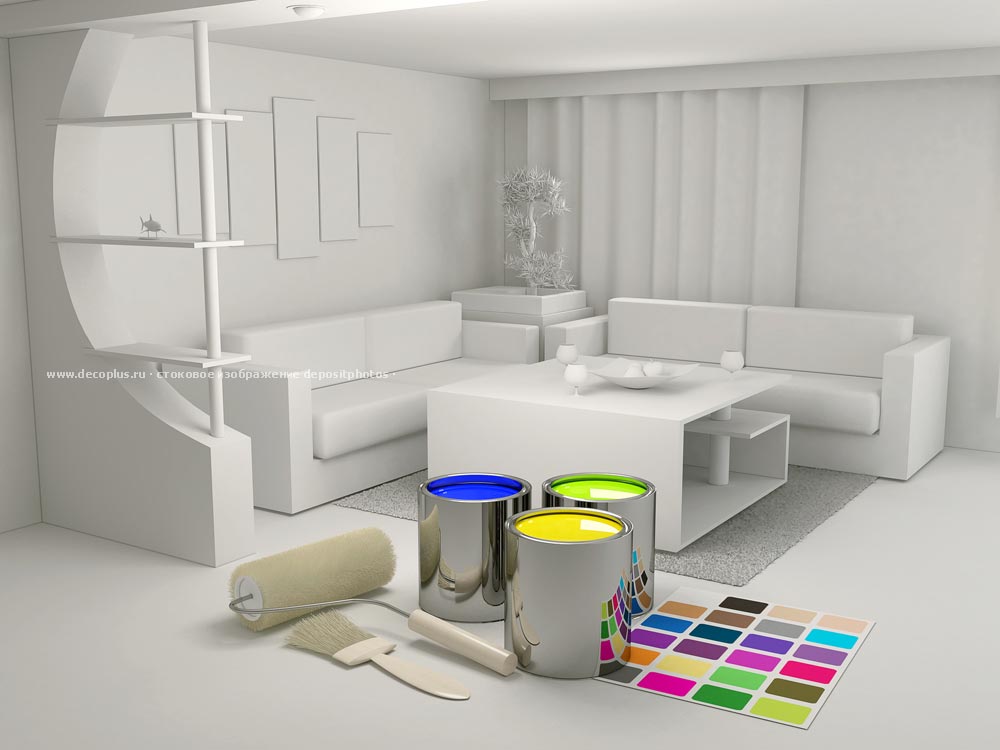
We select the paint
For a children's room, be sure to purchase a paint that has hypoallergenic and environmental properties.
How to paint the walls: types of colors
There are several types of paints. It all depends on their composition:
- Latex. Acrylic paints with the addition of latex. This type is considered more moisture resistant. This allows the material after drying not to be afraid of strong moisture. Therefore, using latex paint, you can paint the walls in the bathroom or shower. This material is able to hide very small flaws, and therefore you do not have to carefully prepare the walls before work.
- Silicone. The walls treated with such paint can be safely wiped with a wet rag and washed with a special tool. The surface remains always vapor permeable, therefore, breathes. A paint of this type is considered completely safe and can be used in the children's room.
- Mineral. Wear -resistant, are not afraid of moisture and detergents. A great option if you want to paint a concrete, brick, plastered surface.
- Acrylic. After drying this paint, a matte, sufficiently flat surface is formed. It tolerates moisture well, therefore, you can always wipe the walls with a damp cloth. Many types of paint are often used for painting very wet rooms.
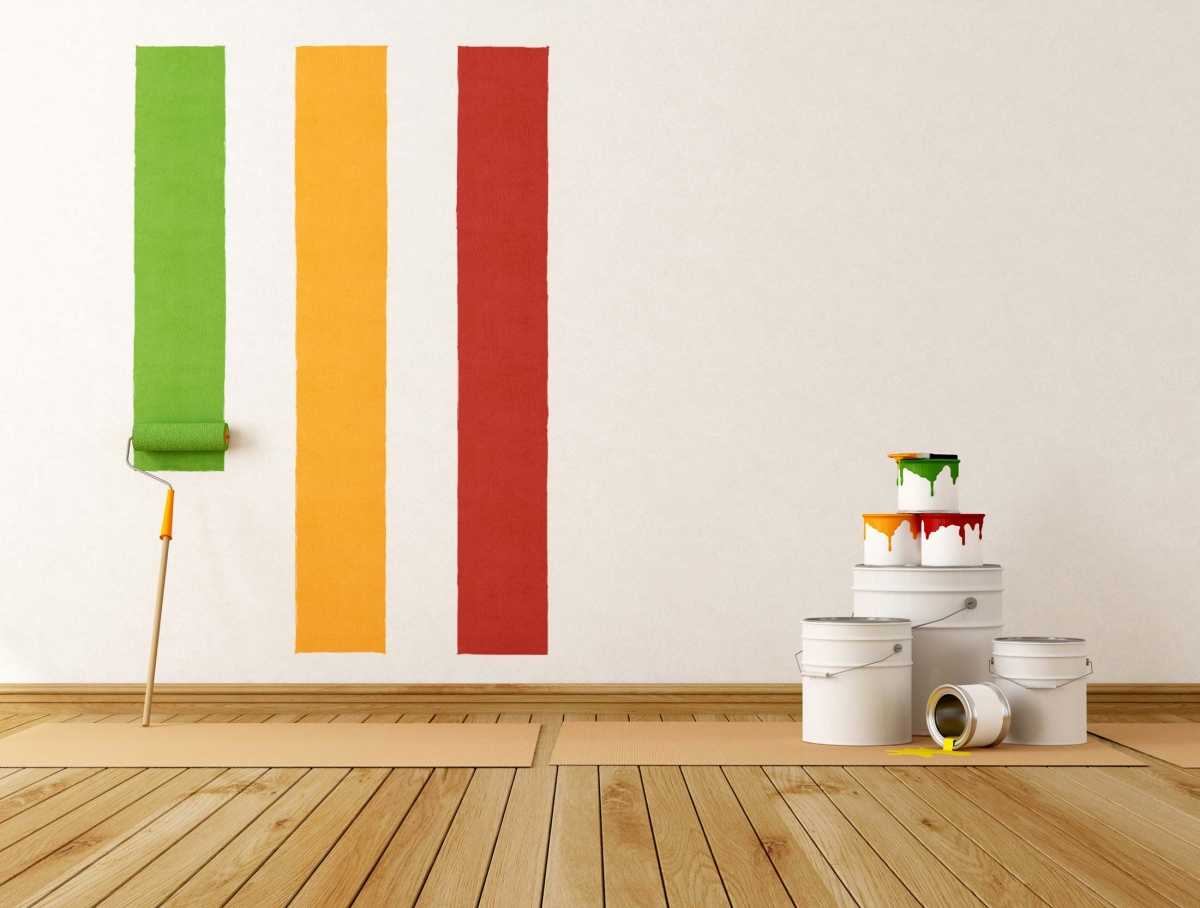
There are a lot of types of colors
Also, paints are divided into the following groups:
- Alkyd paint (The basis of the Olifa or varnish). Such paint gives a durable layer, used to paint the inner surfaces. He is not afraid of light and moisture, but it is considered fiery hazardous.
- Silicate (The base is liquid glass). After drying, the air duct is obtained. The paint has bactericidal qualities.
- Glue (The basis of organic polymers). It does not tolerate moisture, therefore, it is advisable to use it in dry rooms.
- Emulsion (The basis of polymer dispersion). Such paint can be diluted with water. It is considered durable, changes the color after drying, quickly dries, in its composition there is no solvent. In addition, the paint is well applied to the surface and is environmentally friendly than other options.
How to paint the walls in the apartment: what to pay attention to, errors
If you believe that painting walls will take 30 minutes from you, then you are mistaken. Staining some surfaces is a difficult job that has some nuances. An important role here is played by the selected material, the time of day, the choice of the roller. Training is, of course, an ideal method, thanks to which you can achieve success in work. However, we advise you to carefully prepare and try to avoid the following mistakes.
Wall painting that are not prepared
Small defects, a pile from a brush and other similar elements will certainly be under the paint, and therefore they will bring a negative result. Under the paint, all the smallest flaws will be noticeable - you will have to come to terms or clean the wall, then applying a layer of material again. Stains from fat can also appear, even if you paint the wall several times.
In order not to perform double work, prepare the surface in advance. Using sandpaper or plaster tools, clean the irregularities on the wall, then brush the resulting dust. Remove the spots moistened in water or liquid soap with a rag.
Using the primer
You have not treated the wall with a primer? Then the surface after painting may turn out to be uneven. All because due to the primer, hygroscopicity decreases, as a result of which you will save money on buying material. The primer also ensures the “clutch” of paint with the wall, after which it will be much easier for you to paint the surface.
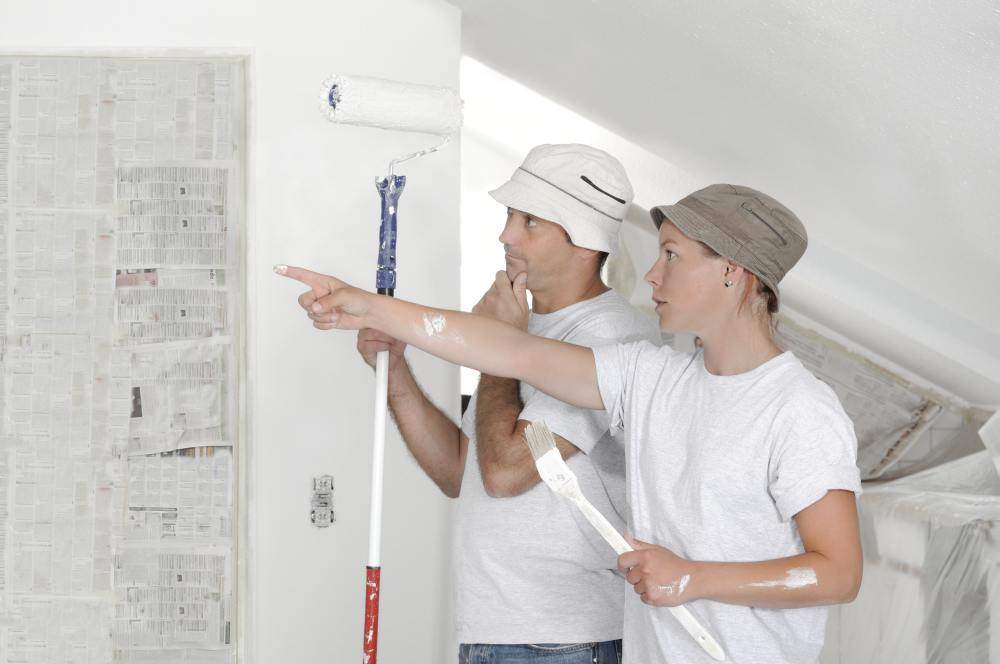
Grind
Buy that primer that is suitable for painting. Apply the material with a vertical brush with thin strips, then repeat the process, but only horizontally. When the base dries, you can apply the first layer of paint.
Paint that is diluted incorrectly
In stores, as a rule, a very thick paint is sold or it begins to thicken while applying to the wall. In this case, you will have to dilute it in advance. If you have water-dispersion paint, then do not dilute it with a white spot. As a result, polymers will begin to stick together faster. But the paint, the base of which is oil, should not be diluted with water.
In such a situation, before painting, carefully study the instructions on the bank, select the corresponding solvent. Do not add a lot of this tool, do it gradually, mixing well the composition.
Surface painting without a sample
The selection of the tone of material is a difficult work, especially in cases where it is necessary to combine several shades at the same time. You will have to redo the resulting work, and the process itself will drag on for a long time.
Add the dye concentrate a little, mixing the composition well. First, pour a little paint into a small container, adding a few drops of the tint. Then look at how you get the tone. Try to achieve the required shade, and only after that do the same with the whole bank. Want to understand whether the resulting color is compatible with the general style of the room or not? Then paint a small piece in the room, wait until the paint dries. If you like the result, get down to business.
Incorrectly selected tool
The use of a special brush or roller is an important point during painting. In order for the paint to fall on the surface evenly, buy 2 rollers and 1 brush. With the help of rollers you “roll up” the surface, and the brush will help you paint the corners and complex areas.
Painting in various directions
Did you start painting the surface horizontally, and then went to apply the material vertically? In this case, the wall after drying will acquire an ugly appearance. Each smear will appear, especially if you applied the paint with a brush.
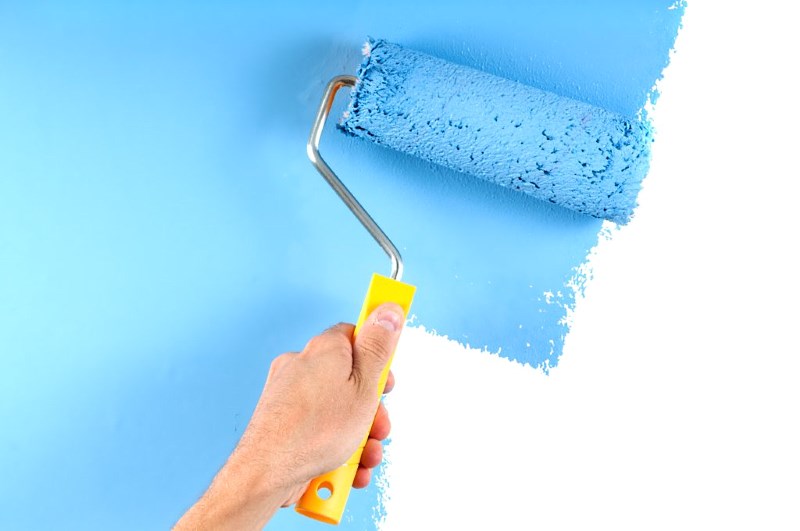
Paint in one direction
Initially, decide how exactly you will paint the wall - vertically or horizontally. This is the only way the material will lie evenly. During painting with several layers, alternate ways. For example, apply the initial layer horizontally, the next layer is horizontally.
Wall painting in one layer
During the application of the paint in one layer, the surface may turn out to be uneven. Even if you decide to paint over a light surface with dark paint, the original color will appear.
In order to get an intensive shade, apply 2, you can even 3 layers of material. During the first application, distribute the paint along the wall, blend the next layers. So you align the tone, fill out all the irregularities.
Painting on a layer of paint that is not dry
Of course, you want to paint the walls quickly. Therefore, you can start applying the subsequent layer to not quite dried paint. As a result, the wet layer will come off, sticks on the brush. The paint in oil can be generally covered with bubbles, and therefore you will redo the work.
After applying the first layer, wait. While the material dries, take care of something else for a while. Read what is written on the instructions of the paint. There, as a rule, it is written what period of time is needed so that the paint is completely dry. If you have chosen emulsion paint, then you will have to wait a very long time.
Lack of painting material
This problem is sometimes very serious. Firstly, during the time you spend on a trip for paint, the layer applied earlier will dry. And the joints between the new and the old layer will be noticeable. Secondly, it is very difficult to choose the necessary color after adding a ring.
The best option is to buy more colors. If you have something left, you can return the material to the store at any time or leave it for the next time when you need to tint the peeling places. The bank with paint, as a rule, indicates which area can be painted with this volume. Consider the fact that the double layer will require the volume of paint doubly.
The wrong time of the day selected for work
If you apply the material on a very bright day, then it will dry faster, therefore, you will not have time to evenly apply it. Also, from bright natural light, the dye foams or peels. But, if you begin to paint in the evening in a natural light, then you will not be able to see errors.
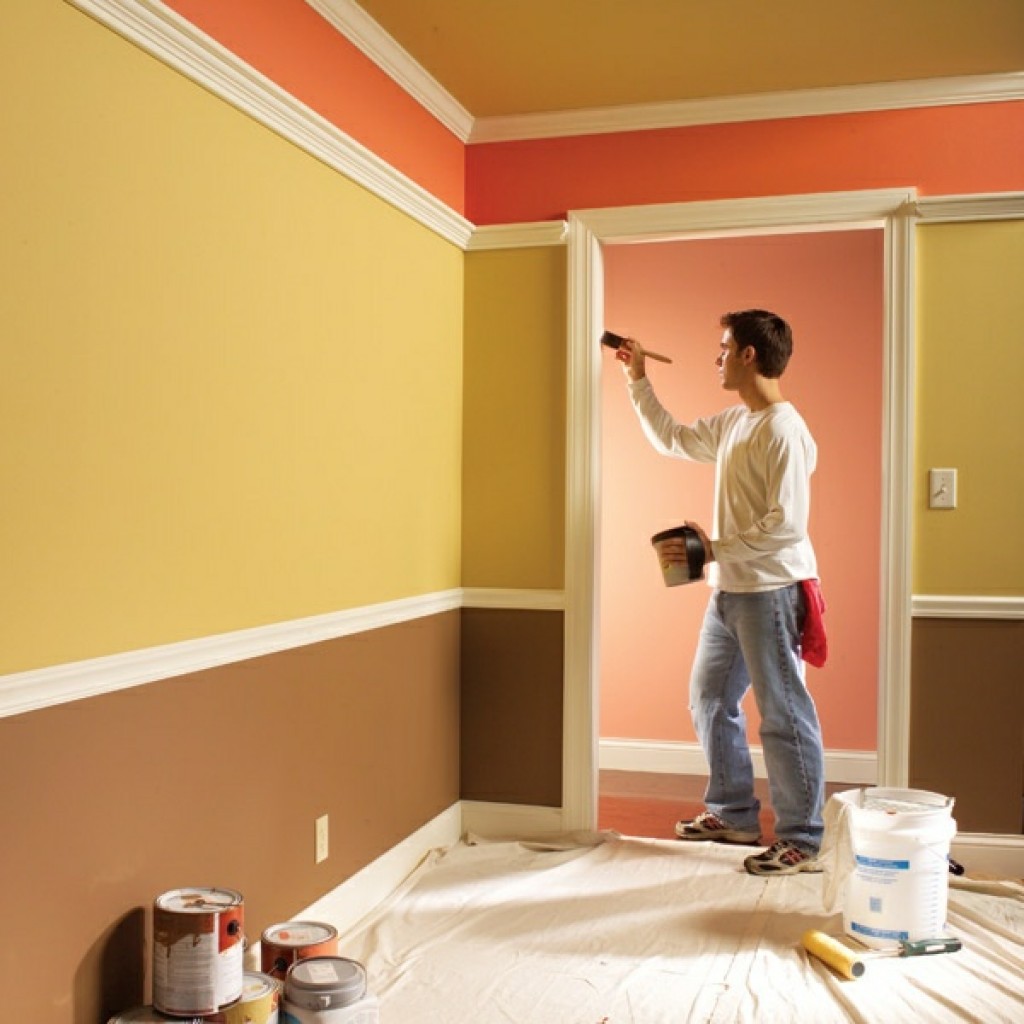
The choice of time is also important
The ideal time for painting is the day when the sun's rays do not penetrate the windows. Walls that look south, stain the sutra or in the evening
How to paint the walls in the apartment: Design
You can paint the walls in the apartment with any methods. It is only important to find the right combination of shades during painting.
Separation of walls into 2 or 3 zones horizontally
This method is considered classic. As a rule, the room is divided into 2 zones. The lower part is painted with dark paint, the upper one is light. The traditional way is to divide the wall into 3 zones.
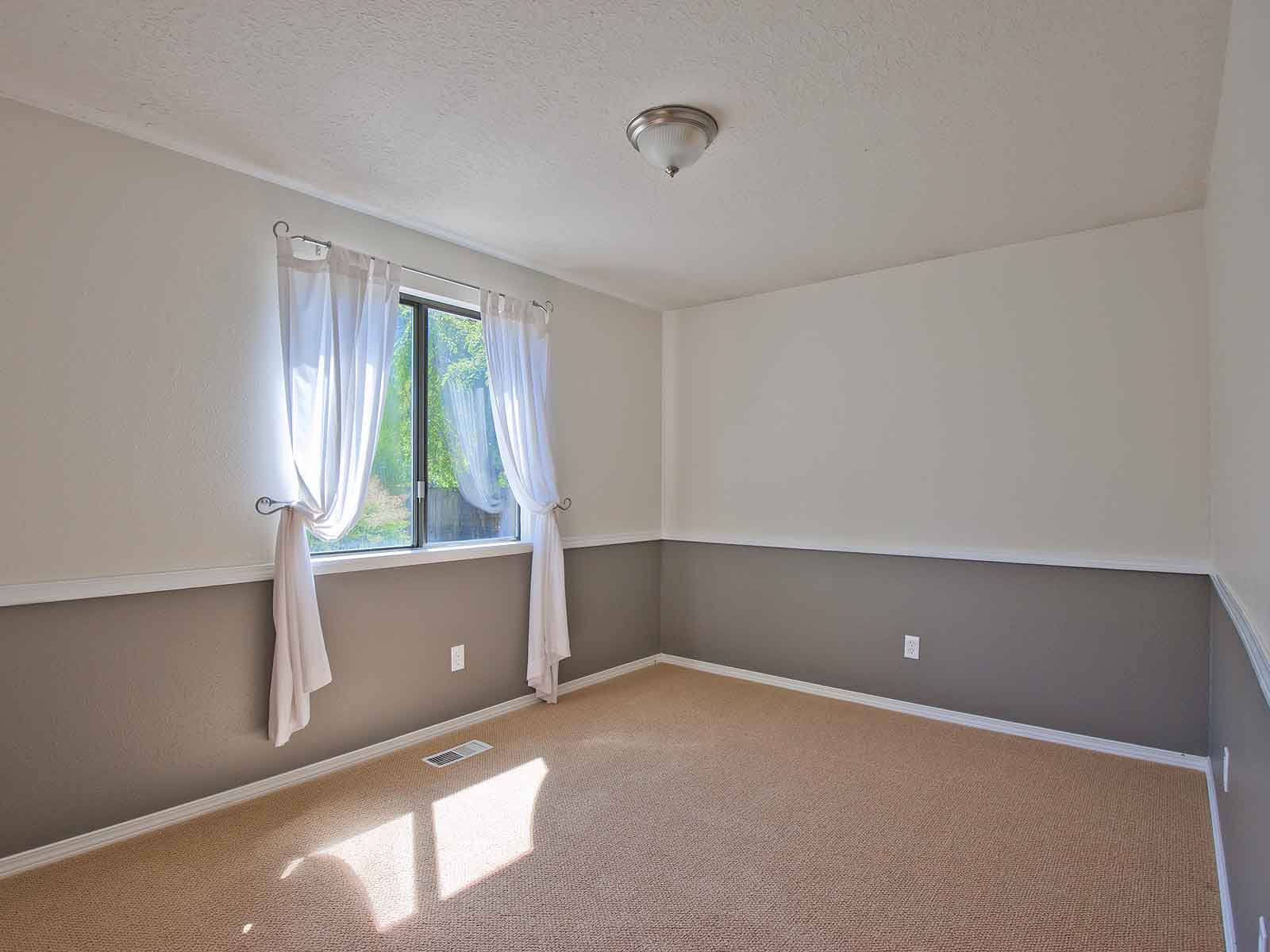
Classic
The lower zone is painted in dark color, others are bright. Just be careful with this technique, since because of it the ceiling is visually lower. There is really an exception - place a light strip under the ceiling itself.
Emphasis on one wall
Very fashionable trend today. In this case, you can apply the following techniques:
- Darn paint of identical color.
- Another tone that matches the palette.
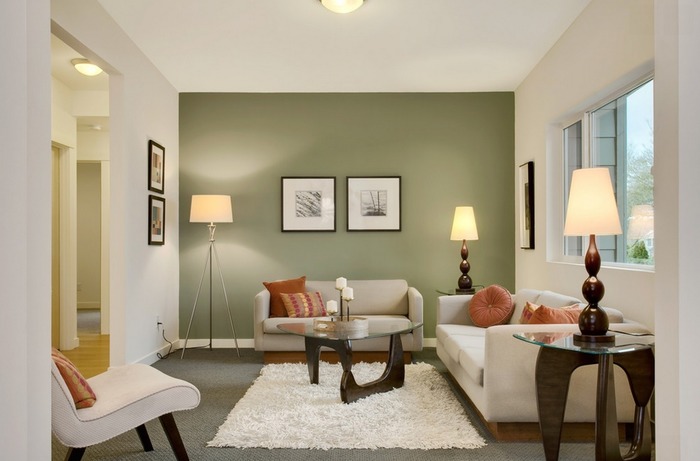
We emphasize
If you competently select details for the interior of the room, then both of these options will suit you. Only you should take into account the fact that it is desirable to use not too sharp combinations in the bedroom. They are ideal for a children's or living room.
Horizontal wide strip
The strip should take approximately at the level where the eyes are. Often those people who want to focus on some kind of interior, for example, on the picture, resort to this method.
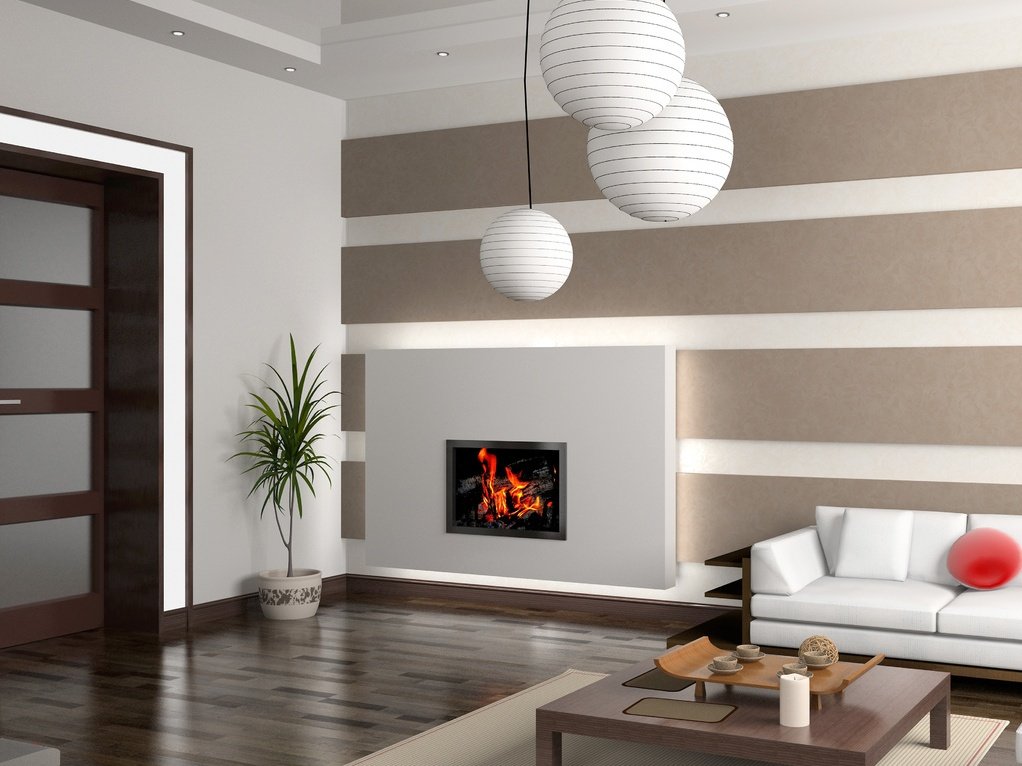
Wide strip
The method looks great in the corridor, as the visually reduced ceiling makes the room a little wider. The reception in the nursery also fits well, because at the expense of the strip children's drawings will be able to stand out.
Walls with stripes
An unusual option that can be used for painting one wall. A bright effect will give a combination of strips of identical color, but various textures - a matte coating and glossy coating.
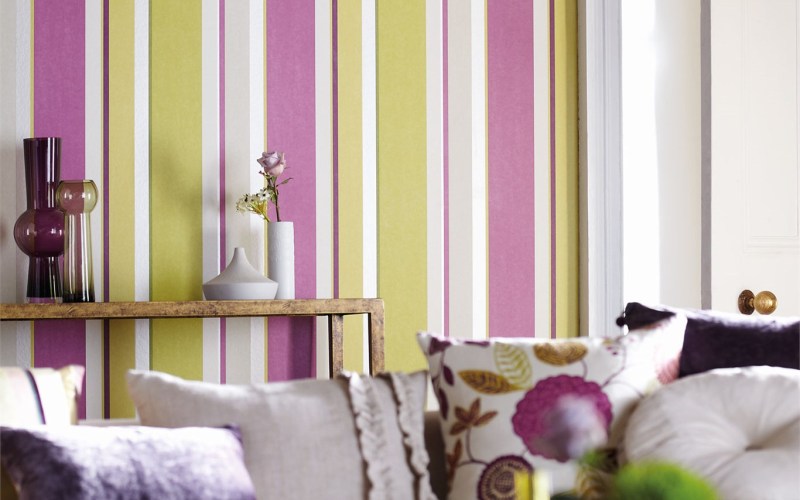
Striped
Highlighting certain elements of the room
Very often in a different color (the most saturated or on the contrary, calm) emphasize certain details. For example, frames, areas where shelves are placed and so on.
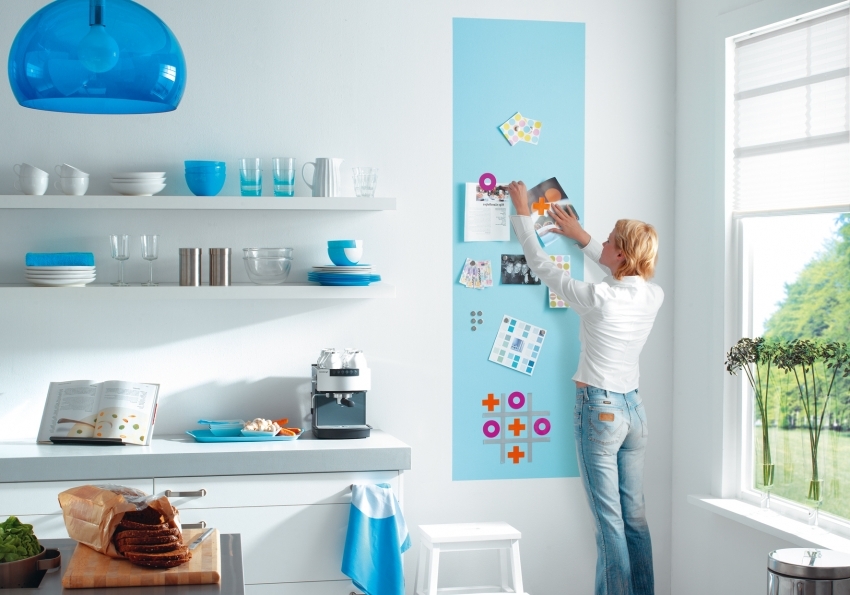
We highlight the zone
An interesting option is the walls circled with dark stripes along the contour, the highlighted angles. This method makes small rooms spacious, since they visually become larger.